
The Belgian real estate market in the first half of 2026 presents a measurable paradox: prices are rising, sales volumes are increasing, but the number of mortgage loans granted is sharply declining. This disconnection between transactional dynamics and access to financing is reshaping the contours of the market. What indicators can help identify the underlying trends for the coming months?
Mortgage Credit in Belgium: The Real Filter of the Market in 2026
Competitors are focusing on prices and sales volumes. The most significant phenomenon is occurring elsewhere: mortgage loans are down by about 11% between January and May 2026 compared to the same period in 2025. In the second quarter, another measure confirms the trend with a decrease of 8.6% in the number of loans and 5.2% in amounts granted.
Fixed rates for 20-25 years hover around 4%, a level not seen in over a decade. The National Bank of Belgium maintains a prudential threshold of 90% loan-to-value, effectively eliminating 100% financing. In practical terms, a buyer must have at least 10% of the property’s price in equity, plus notary fees.
This tightening acts as a filter on borrower profiles. First-time buyers without significant savings are the first to be affected, while buyers with liquidity or existing assets maintain smooth access to the market. The listings available on https://www.immosphere.be/ reflect this reality, with properties being sold to already capitalized buyers.
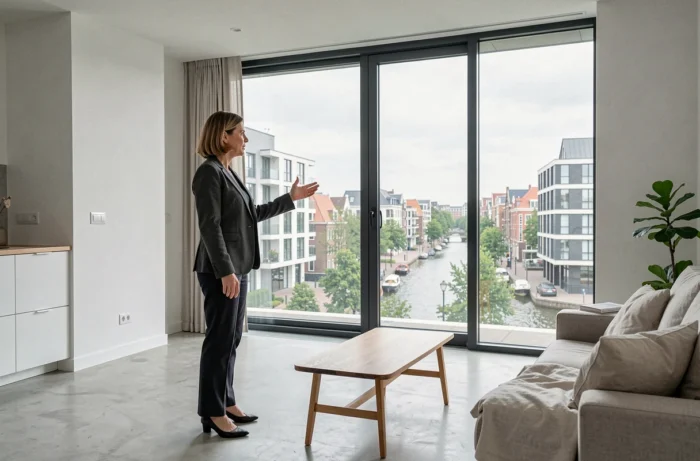
Real Estate Prices by Belgian Region: Comparative Table for the First Quarter of 2026
The data published by Statbel and the Federation of Notaries allows for a comparison of median price levels between regions. The gap remains considerable.
| Property Type | Wallonia | Flanders | Brussels-Capital |
|---|---|---|---|
| Detached/Semi-Detached House | €200,000 | €321,318 | €543,500 |
| Open-Type House | €335,000 | €450,000 | €1,487,500 |
| Average House Price (Fednot) | €359,965 (+2.8% vs 2025) | ||
| Average Apartment Price (Fednot) | €288,250 (+2.2% vs 2025) | ||
Brussels remains out of the ordinary for open-type houses, with a median price close to one and a half million euros. In contrast, Wallonia maintains accessible levels, particularly for detached or semi-detached houses at €200,000.
The price increase remains moderate across the country: +2.8% for houses and +2.2% for apartments. These increases barely absorb inflation, meaning the real value of properties is stagnating in several segments.
Apartment Sales Up 7.8%: What This Figure Indicates
The barometer from the Federation of Notaries records +3.4% in housing sales in the first quarter of 2026 compared to the same period last year. The apartment segment is driving this recovery with a growth of +7.8%, compared to only +1.9% for houses.
Brussels shows the most marked dynamics: +6.1% in housing sales, including +6.7% for apartments. Wallonia follows with +3.1%, also driven by apartments.
Several factors explain this shift towards apartments:
- The lower entry ticket (average national €288,250 compared to €359,965 for a house) reduces the equity effort required by banks
- The energy requirements of regional renovation schedules weigh more heavily on older houses, which are often more energy-intensive than recent condominiums
- Investors are shifting to smaller units to maintain an acceptable rental yield in the face of rising interest rates
Real Estate Taxation and Energy Renovation: Two Constraints Weighing on Belgian Investors
Starting from the 2026 tax year, the federal tax advantage for housing savings for loans taken out before 2005 is abolished. For multiple property owners who still benefited from this deduction, the net profitability of certain properties decreases.
The property tax is also increasing, with an indexing of the cadastral income leading to a 2.5% increase in property tax in 2026, before the application of additional municipal cents. In some municipalities, the total tax burden is significantly rising.
Energy Renovation Schedule: Variable Obligations by Region
Flanders imposes a strict schedule on new owners of poorly rated properties on the EPC scale. Wallonia and Brussels present similar requirements, with penalties for non-compliance. For an investor, acquiring a property with a poor energy label now implies a renovation budget to be integrated right from the profitability calculation.
Conversely, the reduction of VAT on heat pumps offers a lever to reduce the cost of these renovations. This type of targeted measure does not fully offset the increasing obligations but alters the trade-offs between new and old.
The Belgian real estate market in 2026 is less defined by prices, which remain moderately rising, than by the conditions of access to credit and the new fiscal and energy constraints. The contraction of mortgage credit redefines the profiles of buyers, while the heavier taxation pushes some investors to recalculate their margins. The apartment segment captures transactional activity, indicating that the market is adapting to the new financing realities.