Choosing the equipment for a modern home means making decisions between technical aspects that affect comfort and budget over several decades. Heating, ventilation, kitchen layout, or home automation: each decision depends on recent regulatory constraints and the actual use by the occupants. This article details the concrete criteria that guide these choices, starting with the new rules that change the game.
Carbon threshold in new builds: what the September 2026 decree changes for your equipment
A decree from September 12, 2026, imposes a threshold of 79 gCO₂eq/kWh of final energy for heating and hot water production equipment installed in new homes starting January 1, 2027. This constraint effectively eliminates most fossil fuel boilers from construction projects.
For a new home project, the choice is thus limited to systems compatible with this ceiling: air-water heat pumps, geothermal heat pumps, or connection to a district heating network. Pellet stoves or inserts, often presented as modern solutions, are no longer sufficient on their own to meet this threshold if they are the main system.
This regulatory framework has a direct consequence on the budget. Heat pumps represent a higher initial investment than a conventional gas boiler, but their efficiency (expressed by the coefficient of performance) compensates for this difference over time. Before comparing brands, first check that the proposed system falls within the carbon envelope imposed by the decree.
To explore all the equipment on Perspective Maison, you must first understand these regulatory constraints that condition the options actually available.
MaPrimeRénov’ and individual aids: equipment still eligible for renovation
Since September 1, 2026, the new architecture of MaPrimeRénov’ has significantly reduced the scope of aid for equipment installed “as a gesture,” meaning without a comprehensive renovation of the home. This reform directly affects the financial decisions of a house undergoing modernization.
Only three operations remain eligible as isolated gestures: the installation of a heat pump (air-water or geothermal), connection to a district heating network, and the removal of an oil tank. Thermodynamic water heaters, wood stoves, dual-flow VMC, roof insulation, and window replacements have been removed from the scope of individual aids.
In practical terms, if you are renovating an existing house and your budget partly depends on public aid, the choice of heating equipment is no longer free. A pellet stove remains technically relevant, but it will need to be fully financed without subsidy, unless it is included in a comprehensive renovation project.
Choosing between isolated gesture and comprehensive renovation
Comprehensive renovation remains eligible for broader aids, covering insulation, ventilation, and heating within the same project. The additional cost of support (energy audit, monitoring by an approved operator) can be offset by the accumulation of grants.
Before choosing equipment piece by piece, consider the scope of your project. A comprehensive project costs more upfront but opens up aids that are inaccessible with isolated gestures.
Kitchen and bathroom: often overlooked technical criteria
The kitchen and bathroom concentrate the majority of a home’s technical equipment: plumbing, ventilation, electricity, moisture-resistant coverings. Choosing a countertop or a vanity based purely on aesthetic criteria leads to premature replacements.
Kitchen: think in terms of activity triangle
The layout of a functional kitchen relies on the distance between three zones: storage (refrigerator, pantry), preparation (countertop, sink), and cooking (hob, oven). When these three areas are too far apart or poorly oriented, each meal generates unnecessary movements that become tiring over time.
- The countertop should provide at least a continuous surface between the sink and the hob, without interruption by a passage or a column
- Electrical outlets on the backsplash must be positioned outside the water projection zone, at a regulatory distance from the sink
- The choice between induction and ceramic glass influences the necessary ventilation: induction produces less ambient heat, which reduces the required hood power
Bathroom: ventilation and electrical volumes
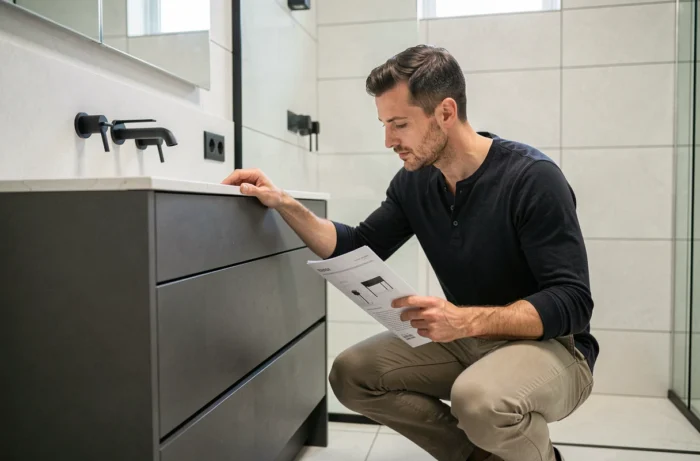
The NF C 15-100 standard defines safety volumes around the bathtub and shower. Any electrical equipment (towel warmer, light fixture, outlet) must comply with these zones, or it risks non-compliance during an inspection or resale.
The VMC is the first piece of equipment to size in a bathroom, before choosing tiles or faucets. Insufficient extraction causes condensation, mold, and accelerated degradation of seals and paints.

Home automation and connected equipment: distinguishing gadgets from functional items
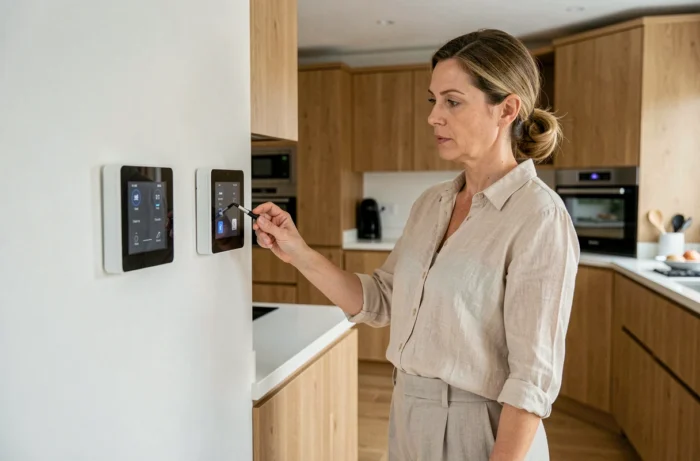
Home automation systems promise centralized control of heating, lighting, and shutters. Their real interest depends on two factors: the interoperability of protocols and the longevity of the manufacturer.
A connected thermostat that communicates via Wi-Fi with a proprietary application stops working if the publisher abandons the product. Open protocols (Zigbee, Z-Wave, Matter) offer a better guarantee of long-term compatibility. Before investing in an ecosystem, ensure that the selected equipment supports at least one standard non-proprietary protocol.
Zone-based heating control remains the home automation application with the clearest return on investment. Reducing the temperature by two degrees in unoccupied rooms results in measurable savings on the energy bill, without daily manual intervention.
Other uses (automated lighting, motorized blinds, voice assistants) fall under comfort. Their installation cost in new builds remains moderate if the wiring is planned from the design stage. In renovations, running cables or adding wireless modules significantly increases the bill.
The choice of equipment for a modern home operates on three levels: regulatory compliance (carbon threshold, electrical standards), financing (aids focused on heat pumps and comprehensive renovations), and daily use (layout of technical rooms, sustainable home automation protocols). Addressing these three levels in this order avoids selecting appealing equipment that is incompatible with the project’s framework.