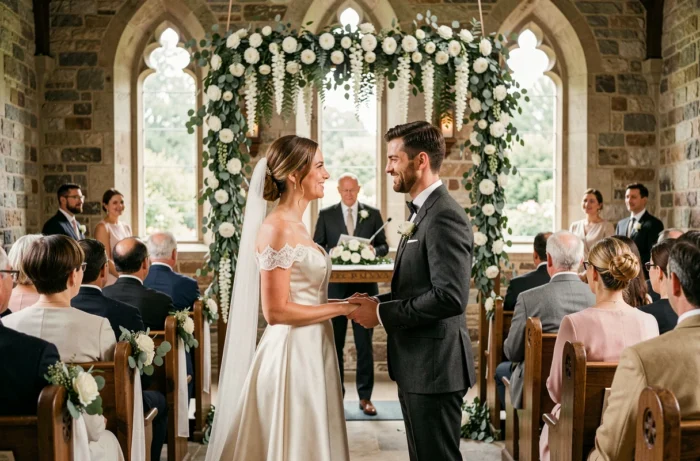
A couple signing the rental contract for a venue eighteen months before the chosen date, only to discover that the noise limit imposes a music curfew at 11 PM: this is the kind of constraint that turns wedding planning into an obstacle course. Organizing an unforgettable wedding does not start with choosing the dress or the color palette, but with the concrete trade-offs that no one wants to make first.
Noise disturbances and the couple’s liability: the legal risk to anticipate
We rarely think about the legal framework when visiting a reception venue. Abnormal neighborhood disturbance is assessed on a case-by-case basis by a judge, without a fixed decibel threshold. Noisy behavior noted during a wedding can lead to a fixed fine of €135, in addition to uncapped civil damages.
In practical terms, this means that the couple and the venue owner share responsibility. Before signing, three points should be checked with the venue manager: the deadline for outdoor music, the existence of a specific municipal order, and the distance to the nearest homes.
Feedback on this point varies depending on rural or urban municipalities, but negotiating a written amplified music slot in the rental contract remains the best protection. Without this clause, an unhappy neighbor can ruin the party and initiate legal action the following Monday.
Platforms like E-Mariage allow filtering venues based on their time and noise constraints, preventing unpleasant surprises after the deposit is paid.
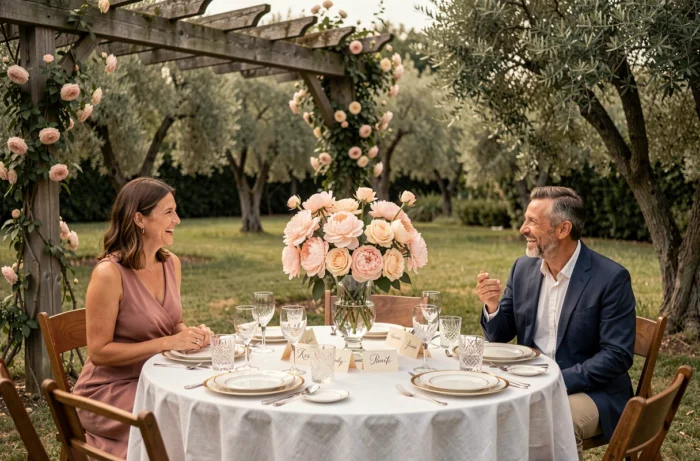
Wedding budget: the couple finances, parents give a flat rate
The model where the bride’s parents pay for the reception while the groom’s parents provide the wine has largely disappeared. According to consolidated feedback over twelve years from the site Lacheriesurlegateau, the couple generally finances between 50 and 70% of the budget from their own savings in 2026.
Parental contributions now take the form of a flat amount with no designated use. Parents provide a total sum, and the couple decides how to allocate it. There is no legal obligation for parents to contribute: their help remains a gift, not a debt.
This shift changes the decision-making dynamic. There are fewer conflicts over the choice of caterer or the number of guests, but also less flexibility if the couple’s savings are limited. It is advisable to address parental financing early, ideally before visiting the first venue, to calibrate the actual budget without any gray areas.
Distributing items without self-deception
The venue and the caterer absorb the largest part of the budget. Rather than splitting equally among ten items, identify the couple’s two non-negotiable priorities (the meal and the music, for example) and adjust the rest accordingly.
- Set a firm ceiling for the venue before any visits, not after falling in love
- Allow for a margin for logistical surprises (generator, backup tent, guest shuttle)
- Distinguish fixed expenses (rental, officiant) from variable expenses (decorations, guest gifts) to know where to cut back if the budget goes off track
Multi-day weddings: transforming the celebration into a stay
Concentrating the entire celebration on a single day remains the norm, but the trend of weddings spread over two or three days is gaining ground. The idea is not to multiply costs, but to dedicate more time to loved ones by transforming the wedding into a holistic experience.
A casual dinner on Friday night, the ceremony and reception on Saturday, a closing brunch on Sunday morning. This format works particularly well when the venue offers on-site accommodation (gîtes, adjoining guest rooms).
The practical advantage is real: guests traveling from afar do not make the round trip in one day, and the couple enjoys quiet moments that are impossible to fit into a twelve-hour schedule. The additional cost often only includes the extra night at the venue and the brunch, which some couples finance through a symbolic contribution from guests.

Eco-friendly decoration and organization: what really changes
Everywhere we read that an eco-friendly wedding is necessary, but in reality, the concrete trade-offs are rarely detailed. Two levers have a measurable impact: reducing food waste at the meal and choosing floral decorations.
For the meal, switching from a buffet to plated service with prior choice (meat, fish, or vegetarian) significantly reduces waste. The caterer orders just enough, and leftovers are easier to manage.
For decoration, locally sourced seasonal flowers are cheaper and last longer than an imported exotic arrangement. One can also rent decorative items (arches, vases, table runners) instead of buying them for one-time use.
- Request a written commitment from the caterer regarding the percentage of local products in the meal
- Prefer reusable containers for guest gifts rather than individually wrapped plastic packaging
- Check if the venue sorts waste and offers composting, which avoids sending everything to the landfill the next day
Animations and original ideas without overproduction
A photobooth with recycled cardboard props, an audio guestbook recorded on a phone, a collaborative playlist where each guest adds a song before the big day: the most memorable activities rely on participation, not on materials. Less logistics, more interaction, and nothing to store in a garage for ten years.
Ultimately, organizing an unforgettable wedding depends on the quality of the choices made in advance, not on their quantity. A legally verified venue, a calibrated budget without gray areas, a format suited to the guests who truly matter, and providers whose commitments are clearly stated in a contract.