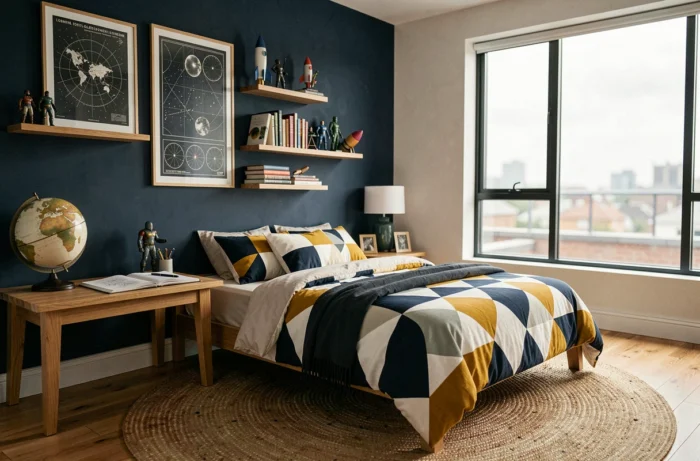
Decorating a modern boy’s room involves making choices that often oppose each other: neutral or saturated colors, compact or modular furniture, painted or dressed walls. Each decision has consequences for the durability of the layout, safety, and budget. This article compares common options to identify those that stand the test of time without sacrificing playfulness.
Wall Paint and VOCs: Criteria to Check Before Choosing a Color
The first instinct to transform a boy’s room is still paint. The choice of shade captures all the attention, but the composition of the product deserves just as much scrutiny.
The revised European decision on the EU Ecolabel for paints, adopted in December 2025, tightens VOC limits for several categories of paints and extends the validity of the new criteria until December 31, 2032. In practical terms, paint bearing this ecolabel guarantees a lower level of volatile organic compounds than the market average, a parameter directly linked to air quality in a room where a child sleeps every night.
For decorating a child’s room, it is possible to discover Read it for decor and explore different palettes suitable for boys’ spaces.
| Type of Paint | VOC Content | Suitable for Children’s Room | Note |
|---|---|---|---|
| Classic Acrylic Paint | Variable, often high | Subject to prolonged ventilation | Check the A+ label |
| European Ecolabel Paint (2025 criteria) | Lowered limit | Yes | Criteria valid until end of 2032 |
| Bio-based Paint without Label | Variable | Not guaranteed without certification | The term “natural” is not regulated |
The mention of “natural” on a paint can does not commit to anything on a regulatory level. Only a certified ecolabel attests to a controlled VOC limit. In a boy’s room, where wall paint and glued decorative elements are often layered, the cumulative chemical load can rise quickly if each product is chosen without care.
Child Furniture Safety: What the 2024 European Regulation Changes
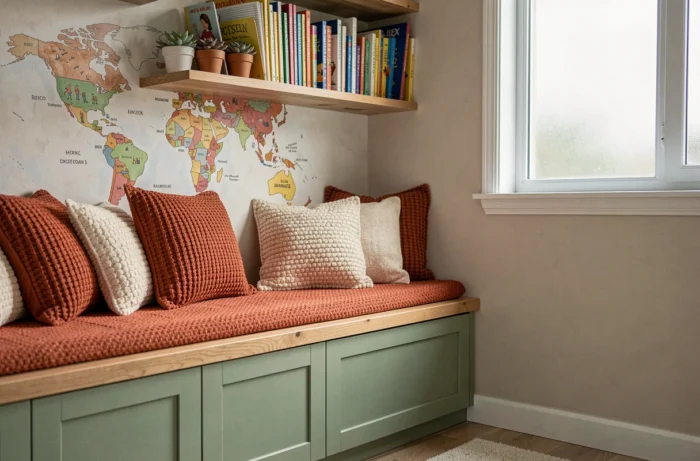
Since December 13, 2024, children’s furniture is subject to a stricter general safety obligation under the European regulation on general product safety. This text does not concern a specific CE marking but imposes increased attention on stability, edges, and tipping risks.
Tall furniture (wardrobes, bookshelves, shelves) must be secured to the wall. Recent field guides highlight that the lack of anchoring is a frequent cause of domestic accidents among children under six years old.
Wall Anchoring and Space Layout
Wall anchoring changes the layout of a boy’s room. A secured piece of furniture can no longer be moved at will, prompting a consideration of the layout plan in advance rather than improvising.
- Identify load-bearing walls or those strong enough to accommodate appropriate anchors for the weight of the furniture
- Position tall storage out of the play area to prevent the child from climbing on it
- Ensure a free floor space of at least one-third of the room, dedicated to play and circulation
Securing each tall piece of furniture to the wall remains the most underestimated safety measure in the layout of a child’s room. The playful aspect of decor should not overshadow this structural constraint.
Loft Bed: Constraints of the Revised EN 747 Standard
The loft bed has become a classic in modern boy’s rooms. Its playful dimension is appealing, but the EN 747 standard revised since 2024 now extends its constraints to so-called “decorative” models, not just traditional bunk beds.
In practice, this changes three parameters:
- The required ceiling height increases for elevated models, excluding certain attic rooms
- The position and angle of the ladder are regulated, limiting fanciful configurations
- Guardrails must meet minimum height requirements, even on a mid-height loft bed
A loft bed compliant with the revised EN 747 standard costs more than a non-certified model, but it reduces the risk of falls, the leading cause of injury related to children’s bedroom furniture.
Choosing Between Loft Bed and Classic Bed
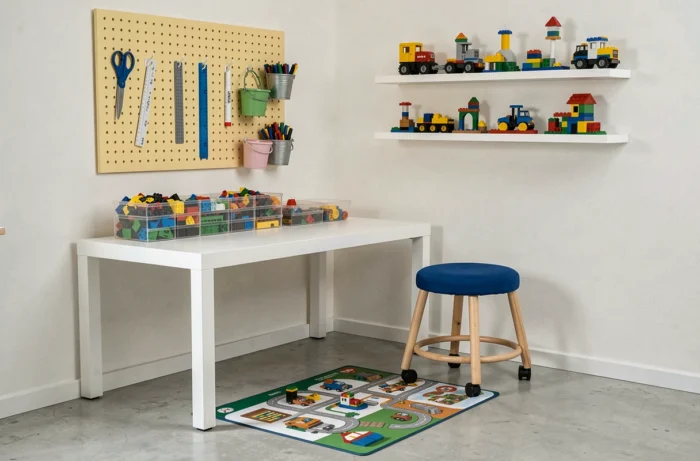
The elevated loft bed is suitable for children over six years old in a room with a ceiling height exceeding two meters. Below that, a floor-level loft bed (Montessori type) offers the same imaginative play without the height constraints or fall risk.
Colors and Wall Decoration: Moving Beyond Standard Blue
Competitors all repeat that one must “move beyond blue.” The real challenge is to understand how a color palette ages with the child.
An accent wall in a bold color (sage green, terracotta, mustard yellow) combines with light neutral walls. This approach allows for repainting just one wall when the child’s tastes change, without having to redo the entire room. Panoramic wallpaper, very popular in boy’s room decor, poses the opposite problem: it commits for several years and its removal often damages the surface.
Limiting permanent decorative elements to one wall makes updates easier without major renovations. Accessories (cushions, posters, rugs) absorb changes in taste at a lower cost.
The success of a boy’s room layout relies less on the accumulation of decor ideas than on the hierarchy of decisions. Air quality, furniture stability, and bed compliance structure the space well before the choice of color or theme. Starting with safety and standards, then decorating around, remains the most reliable order for a result that is both modern and durable.