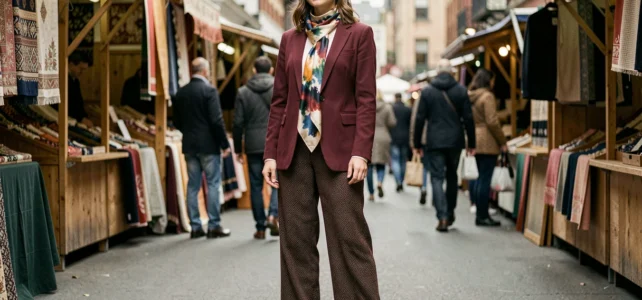
A scarf tied on a handbag, an antique ring found at a flea market, a jacket altered with a hand-sewn patch: these are the details that transform a mundane outfit into a signature style. Expressing one’s personality through unique accessories and clothing doesn’t require an extravagant budget or a wardrobe bursting at the seams, but rather precise and confident choices.
Comfort in Wear: The Filter Style Guides Forget
You can fall in love with a statement bracelet or a structured hat in the store. The problem arises three hours later when the bracelet snags on the coat sleeve and the hat makes it impossible to sit normally on public transport.
An annoying accessory always ends up at the bottom of a drawer. Before committing to a statement piece, test it in everyday movements: putting on a coat, carrying a crossbody bag, sitting down, typing on a keyboard. If the item restricts a common movement, it won’t be worn often enough to become a style marker.
Dangling earrings that get caught in a scarf, a wide belt that constricts after a meal, a rigid bag that doesn’t fit under the arm: these irritations seem minor at the time of purchase, but they kill the desire to wear the piece again. Designers today offer on Always Unique pieces designed to combine uniqueness and everyday wearability, allowing one to escape the dilemma between originality and practicality.

Statement Pieces Second-Hand: Originality and Budget Control
Basics (t-shirts, raw jeans, turtlenecks) are better bought new to ensure fit and fabric durability. For statement pieces, the logic reverses.
Reserving second-hand for expressive pieces maximizes the originality-budget ratio. A vintage leather jacket, a dress with a print unavailable in stores, or a designer bag from a past collection brings a uniqueness that current ready-to-wear cannot replicate. These pieces can be found in thrift stores, on resale platforms, or at garage sales.
The concrete advantage: no one at the same event will wear the same garment. It’s a shortcut to uniqueness that doesn’t require special fashion skills, just a bit of patience and a willingness to dig.
Checklist Before Buying Second-Hand
- The condition of seams and zippers, as replacing a zipper can sometimes cost as much as the piece itself
- The fabric composition on the label, to anticipate care (a blended cashmere pills faster than pure cashmere)
- Actual trying on with the shoes and accessories you usually wear, to check proportions
Clothing Personalization: Going Beyond Printed T-Shirts
Personalization is no longer limited to screen-printed t-shirts. Kiabi has launched an affordable t-shirt personalization service in-store, showing that quick customization is becoming part of common consumption habits. There’s much further to go.
Sewing a patch onto a denim jacket, replacing the buttons on a blazer with mother-of-pearl or brass models, adding a contrasting hem to trousers: these simple modifications transform a standard garment into a unique piece without requiring professional sewing skills. A local alteration shop charges modestly for these interventions.
Embroidering initials on a shirt collar or cuff remains a discreet yet effective classic. For the more adventurous, homemade plant dyeing allows you to recolor a tired garment and give it a look that no brand offers.

Repeated Colors and Details: Building a Recognizable Visual Signature
Wearing unique pieces isn’t enough if every outfit seems to belong to a different person. Coherence arises from a visual thread, not from a uniform.
Specifically, choose one or two recurring elements:
- A limited color palette (a maximum of three shades) that appears in accessories, shoes, or tops
- A recurring type of accessory (always a vintage watch, always a scarf, always geometric earrings)
- A preferred material (linen, velvet, aged leather) that appears in several pieces of the wardrobe
- A systematic clothing detail, like rolling up blazer sleeves or wearing a turned-up collar
These repetitions create an identifiable style without conscious effort each morning. Feedback varies on this point, but many find that it takes a few weeks of regular wear before those around you start to associate a detail with your image.
The Common Mistake: Overloading One Outfit with Statement Pieces
A wide-brimmed hat, a bold necklace, a sculpted buckle belt, and studded ankle boots all in the same outfit create an effect of overload. One statement piece per outfit is enough to capture attention. The rest of the outfit serves as a neutral background that highlights the chosen element.
Building a wardrobe that reflects your personality takes time, and that’s precisely what makes it personal. Each added, altered, or thrifted piece tells a deliberate choice, not an impulsive purchase. The most expressive garment remains the one you slip into without hesitation because it aligns with both what you want to show and what you live daily.